A 4-Part Master Series by Randy Hillier

Chapter 3: The Collective Addiction (The Rot of the Silk)
Just as an individual can become addicted to destructive vices and lifestyles, so too can a society or a nation-state become addicted to destructive vices and be in need of rehabilitation or interventions. In either case, rehabilitation will be vehemently opposed and often ends in premature death, suicide, or overdose.
Every time an independent voice stands up to expose the systematic loss of our liberties, a chorus of critics immediately dismisses the warning. They claim that our modern automated existence is the absolute pinnacle of human advancement. They point to our soaring stock portfolios, our instant global logistics, and the effortless convenience of an Uber lifestyle ordered entirely through a screen. They ask: How can a society with so much comfort be considered a trap?
What these defenders of the status quo fail to realize is that they are describing the exact chemical high of an addiction.
An individual addict returns to his vice because his brain prioritizes a short-term hit of dopamine over long-term survival. The globalized marketplace operates on the exact same mechanism, just scaled to the level of nations. The short-term “hits” are immediate economic growth, unprecedented luxury, and effortless convenience. The civilizational hangover is invisible at first, just as it is with the drug addict: the slow, quiet rot of family structures, the abandonment of civic duty, the total destruction of privacy, and the accumulation of inescapable debt. This is the timeless historical engine of decay, and the silk of the web always rots the exact same way.
Look back at the late Roman Republic. It began as a society of disciplined, self-reliant agrarian producers who valued civic virtue and the rule of law above all else, much like Canada or the USA. But as Rome expanded into a global trading superpower, unimaginable wealth centralized in the capital. The character of the Roman citizen along with their society mutated. Production was outsourced to vassal territories, and the local population was transformed into a metropolis of dependent consumers.
The ruling class realized they could no longer command loyalty through character, so they turned to the ultimate pacifier: bread and circuses. The population was fed free grain and entertained with horrific violence. They became completely addicted to their own dependency, oblivious to the fact that their liberty had been entirely extracted by an imperial oligarchy until the barbarian armies were literally at the gates. As the domestic population rotted from within, Rome reached its terminal decline: it abandoned its own citizens, flooding its territories with unassimilated foreign populations who shared no connection to Rome’s foundational values or constitutional origins.
Fourteen centuries later, the Republic of Venice followed the exact same script. Venice built a global maritime empire through fierce patriotism, religious devotion, and unmatched naval productivity. Yet, over generations, its merchant elites turned the state into a marketplace designed exclusively to protect their private fortunes. Instead of innovating or producing, Venice transitioned into the playground of Europe. By the eighteenth century, the city was entirely dependent on an economy built on vice—year-round carnivals, state-sanctioned gambling houses, and prostitution. The civic and moral grit of the population was entirely liquefied by the spider’s venom. When Napoleon’s forces marched on Venice in 1797, a society composed entirely of pleasure-seekers and actors simply surrendered without firing a single shot.
And look closer to our own modern memory at the tragedy of the Weimar Republic. Trapped under the crushing weight of catastrophic debt and hyperinflation, the population did not revolt; instead, they sought a collective escape from reality. The marketplace responded by turning Berlin into Sin City—a global epicenter of explosive public decadence, vice, and perversion. The citizens became so profoundly numbed by the monetization of taboo that they lost their capacity for critical thought. They de-based their moral compass to the lowest common denominator entirely blind to the fact that their moral vacuum was paving a path for an unadulterated tyranny.
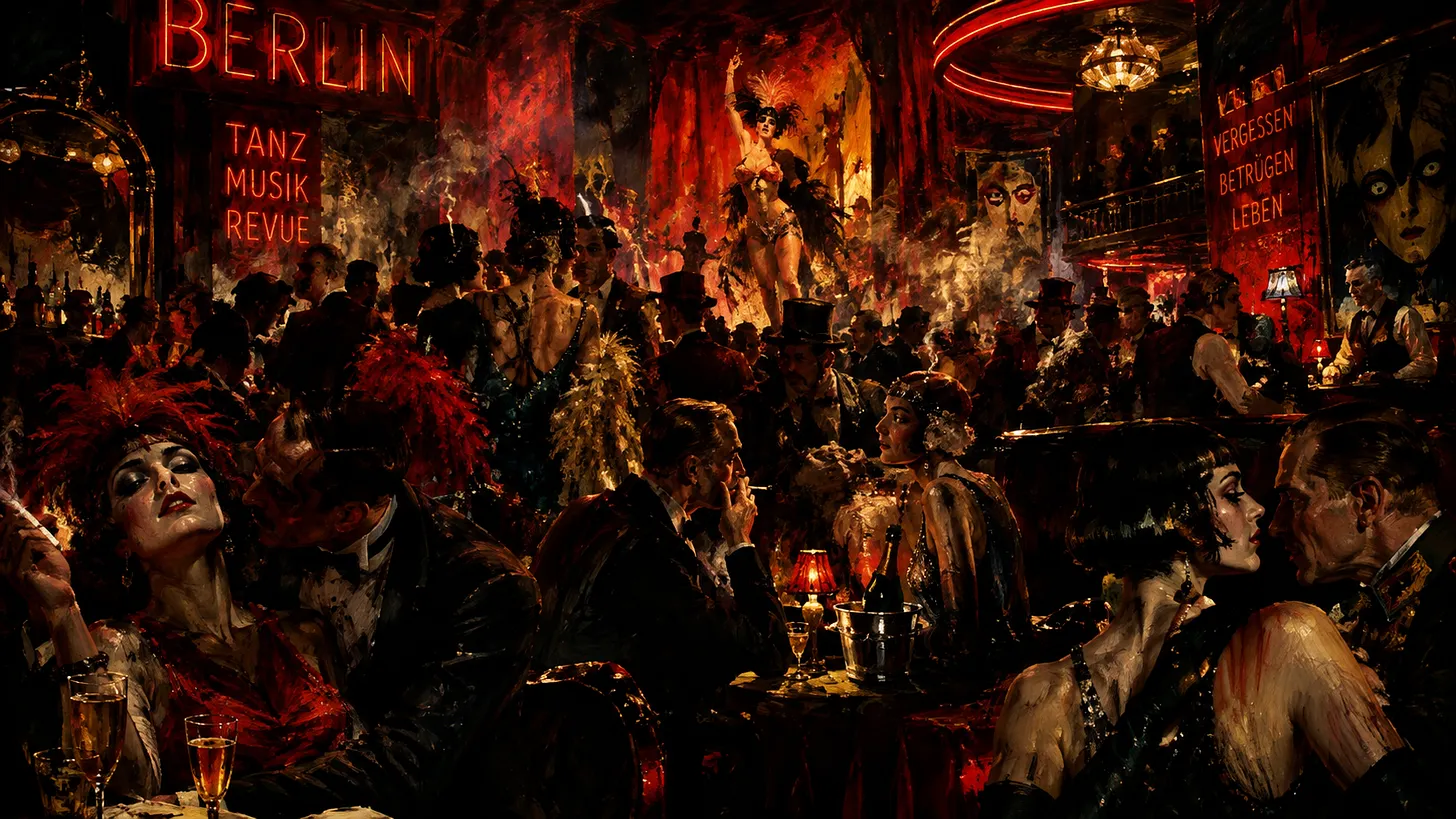
This blindness is not an accident; it has been systematically engineered through our institutions. Over the recent decades, the intentional adoption of Social Emotional Learning (SEL) across our school boards, coupled with the aggressive rejection of stored memory and rigorous historical literacy, has effectively induced a civilizational amnesia. By training the youth to evaluate reality entirely through the fleeting, subjective lens of how they feel in the short term, rather than what we know from the structural patterns of the past, the system has successfully deleted our collective immune system. When you erase the stored memory of how past societies traded their freedom for comfort and vice, you ensure that the current population cannot see the invisible threads tightening around them.
This brings us to the ultimate, terminal milestones that mark that the dystopian end is approaching.
Just like late Rome, when the domestic population of the modern West became too broken down by debt and addiction to sustain the system, the global marketplace deployed uncontrolled mass immigration as an artificial economic transfusion. The corporate oligarchs and their partners in government do not see immigrants as human beings with distinct cultures to be respected; they see them strictly as imported economic units, consumers, and commodities designed to suppress local wages, inflate real estate bubbles, and expand the debt ledger. This rapid, calculated displacement completely fractures the remaining social and constitutional fabric of the nation.
Simultaneously, we are witnessing the exact crisis popularized in fictional dystopian novels: a rapid, catastrophic decline in human fertility. But this collapse is not the result of a biological virus; it is the inevitable spiritual consequence of a population addicted to the spider’s venom.
When human identity is stripped of its sacred character and reduced to a mere market asset, a profound state of acedia and nihilism paralyzes the soul. Bound by lifelong debt, isolated by algorithms, and hollowed out by state-sponsored vices like digital pornography and gambling apps, the modern citizen sinks into a deep existential apathy. They stop looking forward. Like Winston in George Orwell’s 1984, we have become a population that fears facing the terrifying moral dilemma of resistance far more than we dread confronting the reality of living in a lie. It is easier to remain pacified, comfortable, and numb within the web than to accept the agonizing spiritual responsibility of standing up for truth.
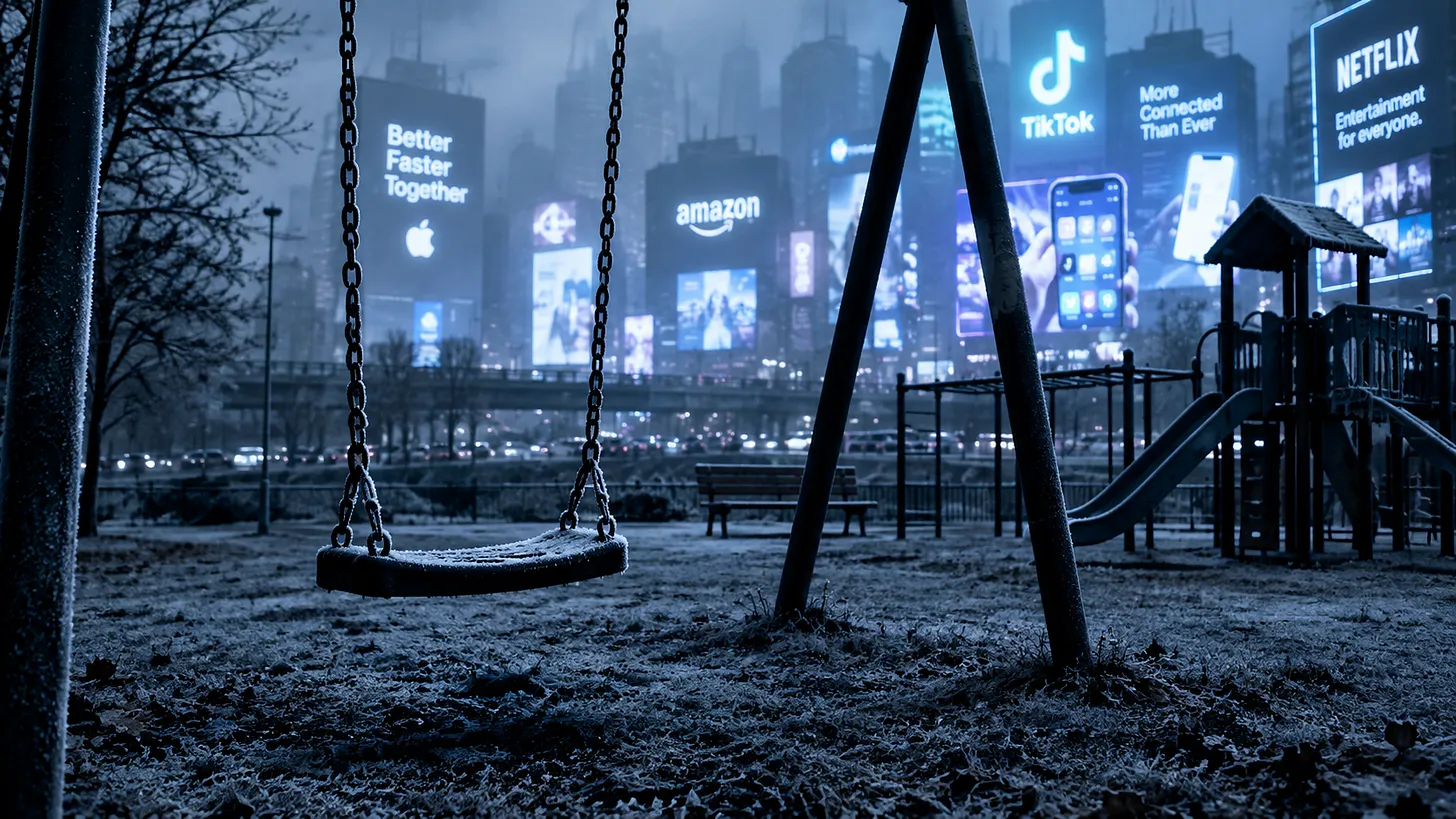
The collapse of our birth rates is the ultimate psychological proof of this surrender. The global web has drained the population of the hope, meaning, and vitality required to bring new life into the world. It is the quiet, voluntary suicide of a civilization.
The warning for modern Canada and the West is stark, but today there is a terrifying differentiator that makes our collective addiction far more lethal than anything Rome, Venice, or Weimar ever faced: the speed of the technology and the global nature of the web.
When those historical empires collapsed, their rot was regional and slow. Humans had generations to catch their breath, adapt, and learn from the consequences of their decadence. Most importantly, because the world was fractured, other isolated nations were ready to step into the vacuum and keep the flame of civilization alive.
Today, technology evolves at an exponential rate while human biology remains completely static. We are hit with permanent psychological whiplash, leaving us entirely incapable of contemplating the moral, spiritual, or constitutional consequences of the digital tools we adopt. Furthermore, because of instant communication and borderless supply chains, the global marketplace has become a singular, interconnected, inescapable web. There is no “elsewhere” left.
If a nation or an individual tries to step off this hyper-accelerated economic treadmill—by rejecting the Faustian bargain, turning off the data surveillance, or shutting down predatory credit networks—the global financial system immediately punishes them. Capital flees, currencies are attacked, and the machine suppresses their visibility. Stopping the addiction looks like economic suicide in the short term, even if continuing it means civilizational suicide in the long term.
We have normalized the venom. We crave the very digital conveniences and corporate dependencies that are systematically draining our purpose and extracting our sovereignty. Just like the boiling frog, we adjust our baseline of what is “normal” with every new app update and every new layer of debt, completely blind to the fact that the water is reaching a fatal temperature. The historical scorecard is clear: a society that becomes addicted to the spider’s silk will eventually be consumed by it.
Randy Hillier-No More Lockdowns_
No More Lockdowns Canada | Randy Hillier is a
reader-supported publication. To receive
new posts and support my work, consider becoming
a free or paid subscriber.